java 泛型类型擦除在运行时表现为泛型信息被移除,导致无法直接获取具体的泛型参数类型。这意味着在运行期,`list

为什么运行时无法直接获取泛型参数
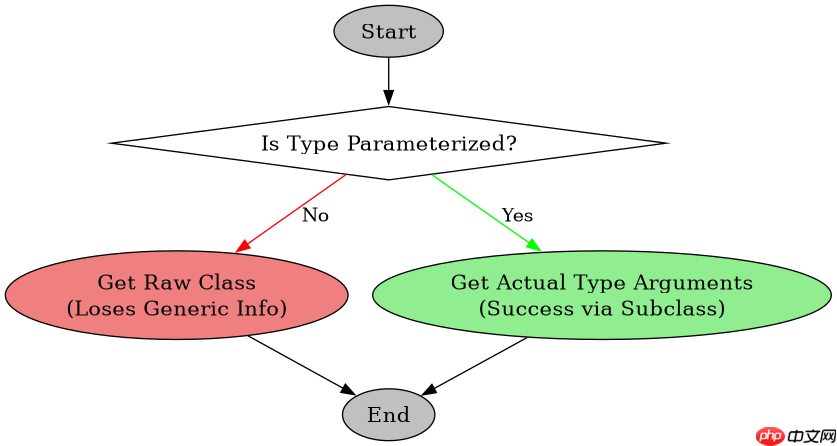
因为 Java 编译器在编译阶段会将泛型类型替换为其边界类型(通常是 `Object`),并在生成的字节码中插入必要的类型转换。因此,JVM 在加载类时并不知道泛型的具体参数。例如,`class Box
import java.lang.reflect.ParameterizedType;
import java.lang.reflect.Type;

public class GenericUtil {
    public static void main(String[] args) {
        // 普通类无法获取泛型信息
        System.out.println(new Box<String>().getClass());

        // 通过匿名内部类继承泛型类,可以保留泛型信息
        Type type = new TypeReference<Box<String>>() {}.getType();
        if (type instanceof ParameterizedType) {
            Type[] actualTypeParams = ((ParameterizedType) type).getActualTypeArguments();
            System.out.println(actualTypeParams[0]); // 输出: class java.lang.String
        }
    }
}

class Box<T> {
    private T value;
    public void setValue(T value) { this.value = value; }
    public T getValue() { return value; }
}

class TypeReference<T> {
    private final Type type;
    protected TypeReference() {
        Type superClass = getClass().getGenericSuperclass();
        type = ((ParameterizedType) superClass).getActualTypeArguments()[0];
    }
}
类型擦除对方法重载的影响
由于类型擦除,两个仅泛型参数不同的方法签名在编译后是相同的,这会导致编译错误。例如,`void print(List

立即学习“Java免费学习笔记(深入)”;

import java.util.List;
import java.util.ArrayList;

public class OverloadExample {
    // 以下代码无法编译,因为签名冲突
    // public void process(List<String> list) {}
    // public void process(List<Integer> list) {}

    // 正确的做法是使用不同方法名
    public void processStrings(List<String> list) {
        System.out.println("Processing Strings");
    }

    public void processIntegers(List<Integer> list) {
        System.out.println("Processing Integers");
    }

    public static void main(String[] args) {
        OverloadExample ex = new OverloadExample();
        List<String> strList = new ArrayList<>();
        List<Integer> intList = new ArrayList<>();

        ex.processStrings(strList);
        ex.processIntegers(intList);
    }
}
如何安全地处理运行时类型检查
当需要在运行期根据类型执行不同逻辑时,不能直接使用泛型参数进行 `instanceof` 检查。正确的做法是在调用处明确传入 Class 对象,或者在泛型类内部维护一个 `Class