Java 中抽象类构造方法怎么被调用
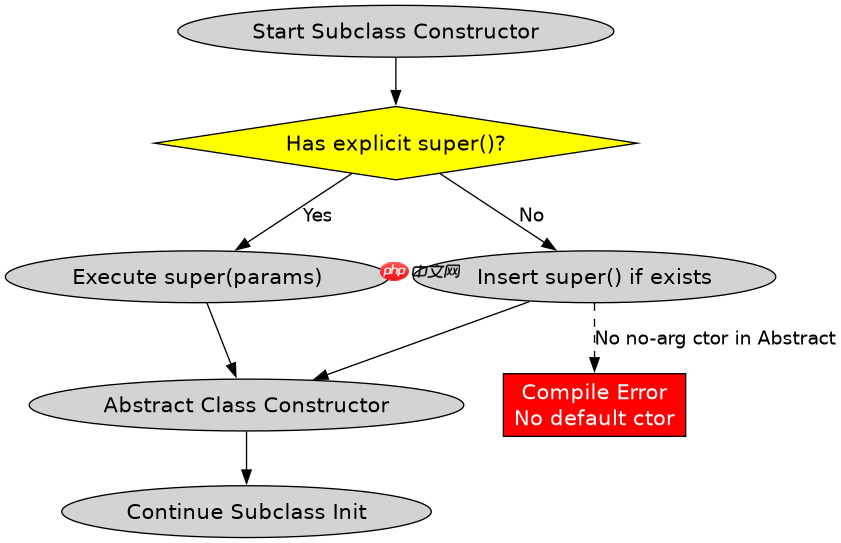
抽象类的构造方法不能直接实例化调用,只能在子类通过 super() 或隐式调用在创建子类对象时执行。具体做法是在子类的构造方法第一行显式或隐式调用父类(抽象类)的构造方法,传入对应的参数,这样在初始化子类实例前会先完成抽象类部分的初始化。

子类如何显式调用抽象类构造方法
子类可以通过 super(参数) 语法显式调用抽象类的特定构造方法。这通常发生在子类有多个构造方法,或者需要传递特定数据给抽象类进行初始化时。如果不写 super,编译器会默认插入无参的 super() 调用,因此如果抽象类没有无参构造方法,子类必须显式调用。
public abstract class AbstractAnimal {
    protected String name;

    public AbstractAnimal(String name) {
        this.name = name;
        System.out.println("AbstractAnimal constructor called: " + name);
    }
}

public class Dog extends AbstractAnimal {
    private String breed;

    public Dog(String name, String breed) {
        super(name); // 显式调用抽象类构造方法
        this.breed = breed;
        System.out.println("Dog constructor called");
    }

    public static void main(String[] args) {
        new Dog("Buddy", "Golden Retriever");
    }
}
运行上述代码,输出顺序为:先打印抽象类的构造信息,再打印子类的构造信息。这验证了抽象类构造方法在子类构造之前执行。

立即学习“Java免费学习笔记(深入)”;
基于程序中某个输入、条件或结果的具体问题
当抽象类只有带参构造方法而没有无参构造方法时,如果子类不显式调用 super(参数),编译器会报错。这是因为 Java 规定子类构造方法必须调用父类的一个构造方法,若父类没有无参构造,则必须显式指定。
public abstract class AbstractBase {
    public AbstractBase(int id) {
        System.out.println("Base initialized with id: " + id);
    }
}

public class Derived extends AbstractBase {
    public Derived() {
        // 编译错误:Implicit super constructor AbstractBase() is undefined.
        // Must explicitly invoke another constructor
        super(100); // 修正:显式调用带参构造
    }

    public static void main(String[] args) {
        new Derived();
    }
}
在上述示例中,Derived 类必须在构造方法中显式调用 super(100),否则无法编译通过。这体现了抽象类构造方法调用的强制性规则。