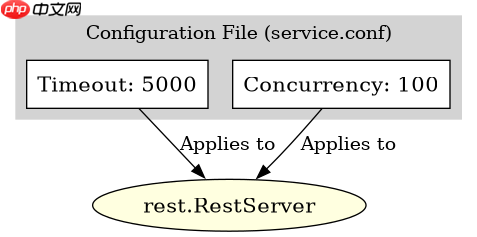
go-zero 框架通过配置 timeout 字段控制超时,并通过 concurrency 限制并发量。在 service.conf 中设置这两个参数即可生效。

如何配置服务级别的超时与并发限制?
在 service.conf 中直接配置 Timeout 和 Concurrency 是最基础的做法。这适用于大多数 RPC 调用场景。
package main

import (
	"context"
	"github.com/zeromicro/go-zero/core/service"
	"github.com/zeromicro/go-zero/rest"
)

func main() {
	// 模拟配置结构
	type Config struct {
		Host        string `json:\"0.0.0.0\"`
		Port        int    `json:\"8888\"`
		Timeout     int64  `json:\"5000\"` // 毫秒
		Concurrency int    `json:\"100\"`  // 最大并发数
	}

	var c Config
	c.Timeout = 5000
	c.Concurrency = 100

	// 实际使用中,go-zero 的 rest.Server 会自动读取这些配置
	// 这里仅展示逻辑
	ctx := context.Background()
	_ = ctx

	// 启动服务
	s := rest.MustNewServer(rest.RestConf{
		Host: c.Host,
		Port: c.Port,
		Timeout: c.Timeout,
		Concurrency: c.Concurrency,
	})
	defer s.Stop()

	println("Server started with timeout:", c.Timeout, "ms, concurrency:", c.Concurrency)
	s.Start()
}
预期输出:Server started with timeout: 5000 ms, concurrency: 100
如何在代码中动态调整或验证这些参数?
除了配置文件,开发者也可以在代码中通过 rest.RestConf 结构体显式指定这些值。这种方式适合需要动态加载配置的场景。

package main

import (
	"fmt"
	"github.com/zeromicro/go-zero/core/conf"
	"github.com/zeromicro/go-zero/rest"
)

type ServiceConfig struct {
	Name    string `json:\"name\"`
	Timeout int64  `json:\"timeout\"`
	Conc    int    `json:\"concurrency\"`
}

func main() {
	// 假设从环境变量或内存中获取配置
	confStr := `{"name":"test","timeout":3000,"concurrency":50}`
	var c ServiceConfig
	conf.MustLoadBytes([]byte(confStr), &c)

	// 创建 rest 服务器
	s := rest.NewServer(rest.RestConf{
		Name:      c.Name,
		Timeout:   c.Timeout,
		Concurrency: c.Conc,
	})

	fmt.Printf("Config loaded: Timeout=%d, Concurrency=%d\n", c.Timeout, c.Conc)
	s.Stop()
}
预期输出:Config loaded: Timeout=3000, Concurrency=50
当并发请求超过限制时会发生什么?
当并发请求数超过 Concurrency 设定的阈值时,新的请求会被拒绝并返回错误。这是保护后端服务不被压垮的关键机制。