使用 trygetvalue 方法可以区分键不存在和查到 false。该方法返回一个布尔值,表示字典中是否包含指定的键;同时通过 out 参数获取对应的值。如果键存在,无论其值为 true 还是 false,trygetvalue 都返回 true;如果键不存在,则返回 false 且 out 参数为默认值 false。

为什么不能用索引器或 ContainsKey 直接判断?
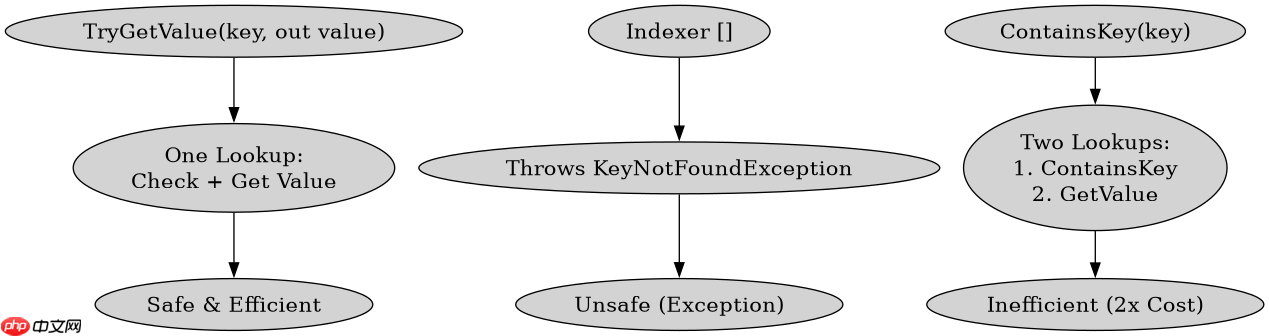
使用索引器 [] 在键不存在时会抛出异常,而 ContainsKey 需要两次查找(一次检查存在性,一次取值),效率较低且代码冗余。TryGetValue 在一次操作中完成检查和取值,是官方推荐的做法。

using System;
using System.Collections.Generic;

class Program
{
    static void Main()
    {
        var dict = new Dictionary<string, bool>
        {
            { "key1", true },
            { "key2", false }
        };

        // 测试键存在且值为 true
        if (dict.TryGetValue("key1", out bool value1))
        {
            Console.WriteLine($"key1 exists: {value1}"); // 输出: key1 exists: True
        }
        else
        {
            Console.WriteLine("key1 does not exist");
        }

        // 测试键存在但值为 false
        if (dict.TryGetValue("key2", out bool value2))
        {
            Console.WriteLine($"key2 exists: {value2}"); // 输出: key2 exists: False
        }
        else
        {
            Console.WriteLine("key2 does not exist");
        }

        // 测试键不存在
        if (dict.TryGetValue("key3", out bool value3))
        {
            Console.WriteLine($"key3 exists: {value3}");
        }
        else
        {
            Console.WriteLine("key3 does not exist"); // 输出: key3 does not exist
        }
    }
}
如何避免误判默认值 false?
当字典中存储的值为 false 时,若错误地使用 ContainsKey 后直接读取值,可能因逻辑混淆导致误判。例如,若仅检查 ContainsKey 为 true 就认为“有有效数据”,会忽略值为 false 的情况。正确做法是始终依赖 TryGetValue 的返回值来判断键是否存在,再根据 out 参数的值进行业务逻辑处理。

using System;
using System.Collections.Generic;

class Program
{
    static void Main()
    {
        var dict = new Dictionary<string, bool>
        {
            { "active", false }
        };

        // 错误做法:仅用 ContainsKey 判断
        if (dict.ContainsKey("active"))
        {
            // 这里无法区分是键不存在还是值为 false
            // 如果后续逻辑假设值为 true 才执行,会出错
            bool val = dict["active"];
            Console.WriteLine($"Active status: {val}"); // 输出: Active status: False
        }

        // 正确做法:使用 TryGetValue
        if (dict.TryGetValue("active", out bool isActive))
        {
            if (isActive)
            {
                Console.WriteLine("User is active");
            }
            else
            {
                Console.WriteLine("User is inactive"); // 明确知道键存在但值为 false
            }
        }
        else
        {
            Console.WriteLine("Key 'active' not found");
        }
    }
}
基于程序中某个输入、条件或结果的具体问题
当程序中使用 Dictionary<string bool></string> 存储用户状态(如登录状态、功能开关)时,若未正确使用 TryGetValue,可能导致权限判断错误或异常崩溃。例如,在 Web 应用中,若从配置字典中读取“是否启用某功能”时,误将键不存在视为“功能禁用”,而实际应为“功能未配置需走默认策略”,就会引发逻辑缺陷。因此,必须严格区分“键缺失”和“值为 false”两种语义。