通过维护一个优先级队列和状态机,结合递归调用与指数退避策略,可以实现具备自动重试能力的异步任务队列。核心做法是定义一个包含任务列表的类,每个任务携带最大重试次数、当前重试计数及延迟时间,执行时捕获异常并判断是否继续入队或抛出错误。

retryQueue 如何管理任务生命周期
该队列通过内部数组存储待处理任务,利用 async/await 顺序执行来保证并发控制。每个任务对象必须包含 fn(异步函数)、maxRetries(最大重试数)和 delay(重试间隔)。当任务执行成功时,从队列移除;失败时检查重试次数,若未超限则重新加入队列尾部并等待指定时间,否则标记为失败。
class RetryQueue {
  constructor() {
    this.queue = [];
    this.processing = false;
  }

  async addTask(task) {
    this.queue.push({
      ...task,
      retries: 0,
      id: Math.random().toString(36).substr(2, 9)
    });
    if (!this.processing) await this.process();
  }

  async process() {
    this.processing = true;
    while (this.queue.length > 0) {
      const task = this.queue.shift();
      try {
        await task.fn();
        console.log(`Task ${task.id} succeeded`);
      } catch (error) {
        task.retries++;
        if (task.retries <= task.maxRetries) {
          console.log(`Task ${task.id} failed, retrying in ${task.delay}ms...`);
          await new Promise(r => setTimeout(r, task.delay));
          this.queue.push(task);
        } else {
          console.error(`Task ${task.id} permanently failed`);
        }
      }
    }
    this.processing = false;
  }
}

// 使用示例
const queue = new RetryQueue();
queue.addTask({
  fn: async () => { throw new Error('Network error'); },
  maxRetries: 3,
  delay: 1000
});
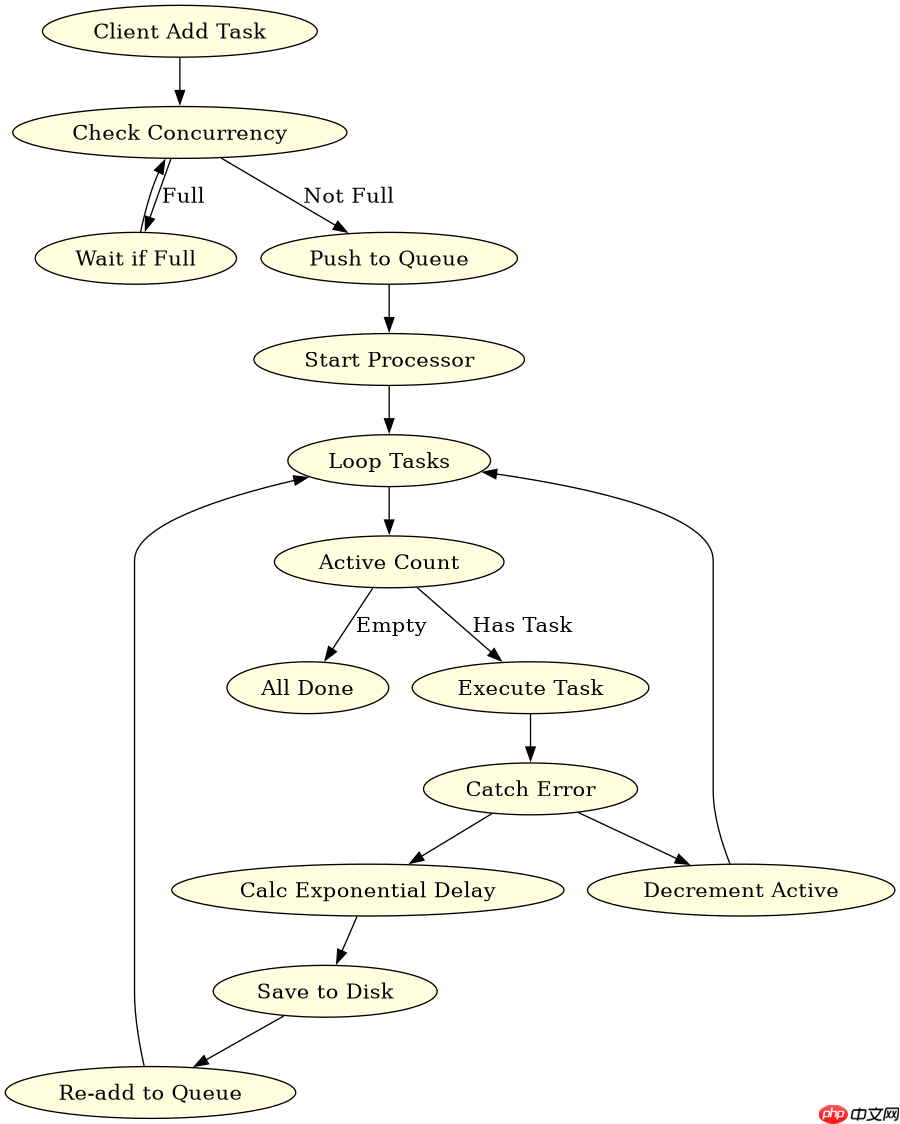
上述代码展示了基本的生命周期管理。输入为一个模拟网络错误的函数,预期结果是任务在三次重试后最终报错。通过 process 方法中的循环,确保队列清空前持续处理任务。这种设计避免了并发竞争,适合对顺序有要求的场景。
立即学习“Java免费学习笔记(深入)”;

一个基于源码的 OpenAI Agents SDK JavaScript 和 TypeScript 技术文档。涵盖了代理编排、工具、转接、追踪以及实际安装路径。
如何实现指数退避与并发限制
为了优化重试效率,通常采用指数退避算法计算延迟时间,即 delay * Math.pow(2, retries)。同时,通过引入信号量或计数器可以限制同时运行的任务数量,防止资源耗尽。修改 addTask 逻辑以支持并发控制,并在 process 中根据当前活跃任务数决定是否立即执行或挂起。

class ConcurrentRetryQueue extends RetryQueue {
  constructor(maxConcurrency = 5) {
    super();
    this.maxConcurrency = maxConcurrency;
    this.activeTasks = 0;
  }

  async addTask(task) {
    const fullTask = {
      ...task,
      retries: 0,
      id: Math.random().toString(36).substr(2, 9),
      calculateDelay: () => task.delay * Math.pow(2, task.retries)
    };

    while (this.activeTasks >= this.maxConcurrency) {
      await new Promise(resolve => setTimeout(resolve, 100));
    }

    this.activeTasks++;
    this.queue.push(fullTask);
    if (!this.processing) this.process();
  }

  async process() {
    this.processing = true;
    while (this.queue.length > 0 || this.activeTasks > 0) {
      if (this.queue.length > 0 && this.activeTasks < this.maxConcurrency) {
        const task = this.queue.shift();
        this.executeTask(task);
      } else {
        await new Promise(resolve => setTimeout(resolve, 100));
      }
    }
    this.processing = false;
  }

  async executeTask(task) {
    try {
      await task.fn();
    } catch (error) {
      task.retries++;
      if (task.retries <= task.maxRetries) {
        await new Promise(r => setTimeout(r, task.calculateDelay()));
        this.queue.push(task);
      }
    } finally {
      this.activeTasks--;
    }
  }
}
此版本引入了并发限制和指数退避。输入为多个高负载任务,预期结果是系统自动调节并发度并动态增加重试延迟。通过 activeTasks 跟踪当前运行数,确保不超过 maxConcurrency。这种实现更适合生产环境中的批量数据处理。
任务失败后的持久化存储策略
在实际应用中,内存队列重启后会丢失数据,因此需要将失败任务持久化到数据库或文件系统中。可以在 catch 块中调用 saveToDisk 或 db.insert 将任务元数据写入存储。恢复时,启动服务读取持久化数据并重新注入队列。关键是要确保原子性,避免重复消费或数据丢失。
async function saveToDisk(task) {
  // 模拟写入文件系统或数据库
  const data = JSON.stringify({
    id: task.id,
    fn: task.fn.toString(),
    retries: task.retries,
    maxRetries: task.maxRetries,
    lastError: 'Simulated error'
  });
  console.log(`Persisted task ${task.id}:`, data);
}

// 在 catch 块中调用
try {
  await task.fn();
} catch (error) {
  task.retries++;
  if (task.retries <= task.maxRetries) {
    await saveToDisk(task); // 持久化失败任务
    await new Promise(r => setTimeout(r, task.calculateDelay()));
    this.queue.push(task);
  }
}
通过持久化机制,即使进程崩溃,任务也能在重启后继续执行。输入为任意失败任务,预期结果是任务信息被安全保存。这种策略提高了系统的鲁棒性,适用于关键业务场景。注意在实际实现中需处理序列化问题,如函数无法直接 JSON 序列化,可改用标识符映射。