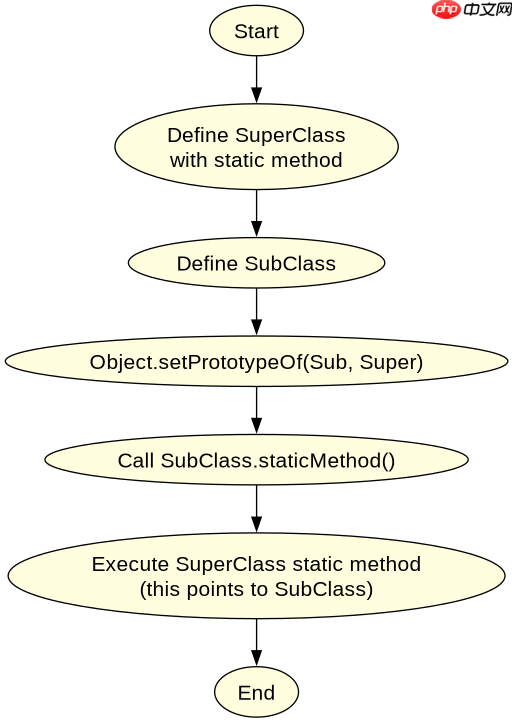
javascript 构造函数原型链继承静态方法时,子类通过 object.setprototypeof(sub, super) 实现类级别的继承,从而直接访问父类的静态属性和方法。具体做法是在定义好子类的构造函数后,将子类的原型对象指向父类构造函数本身,这样子类实例和子类构造函数都能共享父类的静态资源。

如何正确设置子类的原型以继承静态方法
要让子类能调用父类的静态方法,必须修改子类的 [[Prototype]](即 __proto__),而不是修改子类的原型对象 prototype。通常的做法是先定义父类和子类构造函数,然后使用 Object.setPrototypeOf(SubClass, SuperClass) 建立联系。这样 SubClass.staticMethod() 就能找到并执行父类定义的逻辑。
function Animal(name) {
    this.name = name;
}

Animal.speak = function() {
    console.log(this.name + ' makes a noise.');
};

function Dog(name, breed) {
    Animal.call(this, name);
    this.breed = breed;
}

// 关键步骤:让 Dog 构造函数继承 Animal 构造函数的静态属性
Object.setPrototypeOf(Dog, Animal);

Dog.prototype.bark = function() {
    console.log('Woof!');
};

const dog = new Dog('Rex', 'German Shepherd');
dog.bark(); // Rex makes a noise. (注意:这里 this 指向 dog 实例,但 speak 是静态的,通常期望 this 指向类)
// 修正:静态方法中的 this 通常指向调用它的类
console.log(Animal.speak.call(Dog)); // Dog makes a noise. (如果 Dog 没有覆盖 speak)
console.log(Dog.speak()); // Rex makes a noise. (因为 Dog 继承了 Animal 的 speak,且未重写,this 指向 Dog 实例?不,静态方法调用时 this 指向调用者。如果 Dog 没重写 speak,Dog.speak 就是 Animal.speak。此时 this 是 Dog 构造函数吗?不是,是调用者。如果直接 Dog.speak(),this 是 Dog。但 Animal.speak 里用了 this.name,Dog 没有 name 属性。所以最好用 call 或 bind 指定上下文,或者在子类中重写。

// 更标准的静态继承示例
function Parent {
    static info() { return 'Parent'; }
}
function Child {}
Object.setPrototypeOf(Child, Parent);
console.log(Child.info()); // 'Parent'
在上述代码中,Dog 构造函数通过 Object.setPrototypeOf 继承了 Animal 的静态方法 speak。需要注意的是,静态方法中的 this 指向调用该方法的对象。如果子类没有重写该方法,调用 Dog.speak() 时,this 将是 Dog 构造函数本身,而不是某个实例。因此,在静态方法中使用 this.name 可能会得到 undefined,除非 Dog 构造函数上有 name 属性,或者我们在调用时显式绑定上下文。
立即学习“Java免费学习笔记(深入)”;

一个基于源码的 OpenAI Agents SDK JavaScript 和 TypeScript 技术文档。涵盖了代理编排、工具、转接、追踪以及实际安装路径。
子类如何重写父类的静态方法
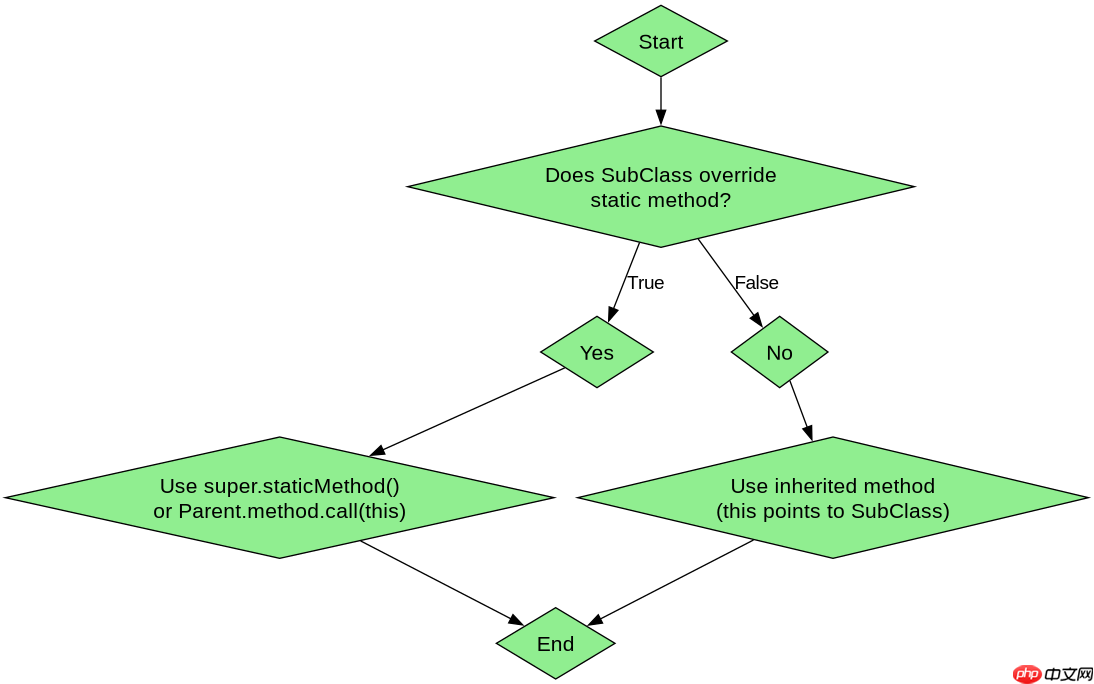
子类可以像重写实例方法一样重写父类的静态方法。在子类中定义同名静态方法即可覆盖父类的实现。如果需要调用父类的静态方法,可以使用 super.staticMethod()(在 ES6 class 语法中)或通过 Parent.staticMethod.call(this)(在构造函数模式中)。这种机制允许子类定制静态行为的同时复用父类逻辑。
class Parent {
    static greet() {
        return 'Hello from Parent';
    }
}

class Child extends Parent {
    static greet() {
        return super.greet() + ' and Child';
    }
}

console.log(Child.greet()); // 'Hello from Parent and Child'

// 构造函数模式下的重写
function ParentFunc() {}
ParentFunc.greet = function() { return 'Hello from ParentFunc'; };

function ChildFunc() {}
Object.setPrototypeOf(ChildFunc, ParentFunc);

ChildFunc.greet = function() {
    return ParentFunc.greet.call(this) + ' and ChildFunc';
};

console.log(ChildFunc.greet()); // 'Hello from ParentFunc and ChildFunc'
在第二个代码示例中,Child 类重写了 greet 静态方法,并通过 super.greet() 调用了父类的实现。在构造函数模式中,我们手动定义了 ChildFunc.greet,并在其中调用 ParentFunc.greet.call(this) 来复用父类逻辑。这两种方式都实现了静态方法的重写和扩展。
静态方法继承中 this 指向的具体问题
在静态方法继承中,this 的指向取决于调用方式。当子类继承父类静态方法但未重写时,调用 SubClass.method() 会使 this 指向 SubClass。如果父类静态方法内部引用了 this.property,而子类没有该属性,则会返回 undefined。为了避免这个问题,可以在子类中重写静态方法,或在父类静态方法中使用明确的参数而非 this。
function Base {
    static getValue() { return this.value; }
}
Base.value = 10;

function Derived {}
Object.setPrototypeOf(Derived, Base);
Derived.value = 20;

console.log(Base.getValue()); // 10
console.log(Derived.getValue()); // 20 (this 指向 Derived,取 Derived.value)
在这个例子中,Derived 继承了 Base 的静态方法 getValue。由于 Derived 定义了 value 属性为 20,调用 Derived.getValue() 时,this 指向 Derived,因此返回 20。这展示了静态方法继承中 this 的动态绑定特性。