使用 collections.chainmap 合并多个配置字典,核心做法是将这些字典按优先级从高到低传入构造函数,从而构建一个视图对象。该对象在读取键值时会自动从第一个字典开始向后查找,找到即返回,实现了无需拷贝数据的动态合并。若需生成包含所有键值的普通字典以便持久化或修改,可调用其 maps 属性或使用 **dict.fromkeys() 技巧进行扁平化处理。

ChainMap 的查找顺序与优先级机制是怎样的
ChainMap 通过维护一个内部列表来存储多个字典,查找操作严格遵循“先入为主”的优先级原则。当访问某个键时,它会在列表中依次搜索,一旦在当前字典中找到该键,立即返回对应的值,并停止后续搜索。这意味着排在列表前面的字典具有最高优先级,后面的字典仅作为默认值或后备方案存在。这种机制使得配置覆盖逻辑非常直观:用户配置优先于系统配置,系统配置优先于默认配置。
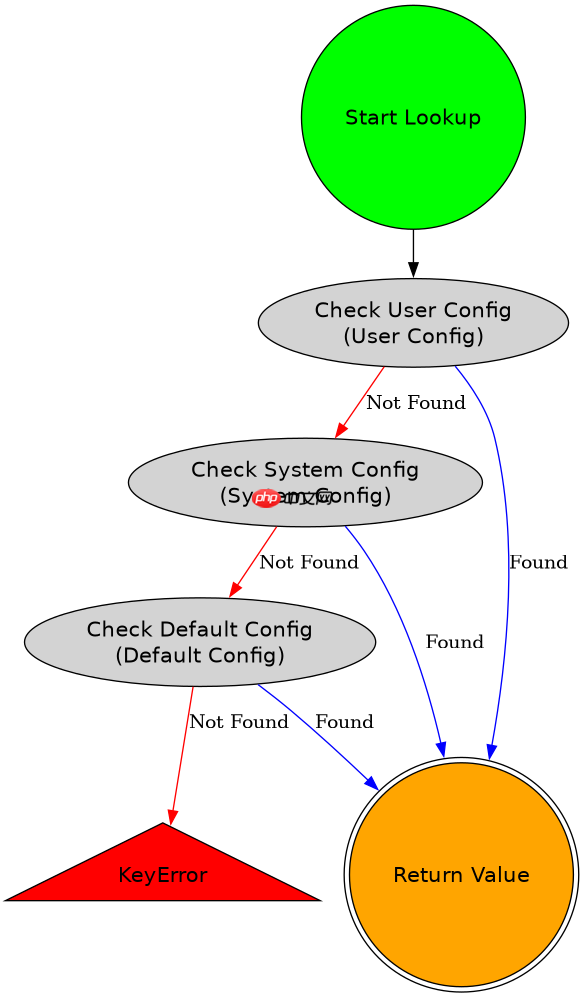
from collections import ChainMap

default_config = {"debug": False, "log_level": "INFO", "db_host": "localhost"}
system_config = {"debug": True, "timeout": 30}
user_config = {"log_level": "DEBUG"}

# 优先级:user_config > system_config > default_config
config_map = ChainMap(user_config, system_config, default_config)

print(config_map["debug"])       # 输出: True (来自 user_config? No, user has no debug. Wait, user_config doesn't have debug. It's in system_config)
# Correction: user_config has log_level. system_config has debug.
# Let's trace:
# debug: not in user_config -> found in system_config (True)
# log_level: found in user_config (DEBUG)
# db_host: not in user/system -> found in default_config (localhost)
# timeout: found in system_config (30)

print(config_map["log_level"])   # 输出: DEBUG
print(config_map["db_host"])     # 输出: localhost
print(config_map["timeout"])     # 输出: 30

# 验证优先级:如果 user_config 也定义了 debug
user_config_with_debug = {"log_level": "DEBUG", "debug": False}
config_map_v2 = ChainMap(user_config_with_debug, system_config, default_config)
print(config_map_v2["debug"])    # 输出: False (来自 user_config)
如何将 ChainMap 转换为标准的 Python 字典
虽然 ChainMap 提供了高效的视图接口,但在某些场景下(如 JSON 序列化、传递给不支持链式映射的库)需要将其转换为标准的 dict 对象。由于标准字典无法保留“优先级”语义,转换过程会将所有字典中的键值对合并,后出现的值会覆盖先出现的值。因此,为了保持原有的优先级逻辑,必须按照优先级从低到高反转输入顺序进行合并,或者利用 ChainMap 的 maps 属性逆向迭代。

Nodriver是Undetected-Chromedriver的官方继承者,提供异步浏览器自动化功能,可直接与Chrome DevTools Protocol通信,无需Selenium或WebDriver依赖。专为规避反机器人系统(包括Cloudflare和Imperva)的隐蔽网络自动化而构建。
立即学习“Python免费学习笔记(深入)”;

# 方法一:利用 maps 属性逆向合并(推荐,保持优先级)
# ChainMap.maps 是一个列表,索引 0 是最高优先级
# 我们需要从最后一个字典开始遍历,这样高优先级的值会覆盖低优先级的值
merged_dict = {}
for d in reversed(config_map.maps):
    merged_dict.update(d)

print(merged_dict)
# 输出示例: {'log_level': 'DEBUG', 'debug': True, 'db_host': 'localhost', 'timeout': 30}
# 注意:这里 debug 是 True,因为 system_config (index 1) 的值覆盖了 default_config (index 2)
# 且 user_config (index 0) 没有 debug,所以取 system_config 的。

# 方法二:使用 dict 构造器(简单但需注意顺序)
# 如果直接传 ChainMap 给 dict(),它会迭代 items()
# items() 的行为类似于 get(),即遇到重复键只取第一个找到的
# 所以 dict(config_map) 实际上保留了优先级逻辑
standard_dict = dict(config_map)
print(standard_dict)
# 输出与上面一致
修改 ChainMap 中的值会影响原始字典吗
这是一个常见的误区。ChainMap 本身是一个只读视图,它不存储数据,数据存储在原始的字典中。当你尝试通过 ChainMap 对象设置某个键的值时(例如 config_map["key"] = value),它总是将新值写入到 ChainMap 内部的第一个字典(即最高优先级的字典)中。如果第一个字典是不可变的(如 types.MappingProxyType 包装的字典)或者你希望修改不影响原始配置源,这种做法会导致错误或意外行为。因此,在修改配置时,应明确知道目标字典的位置,或直接操作原始字典对象。