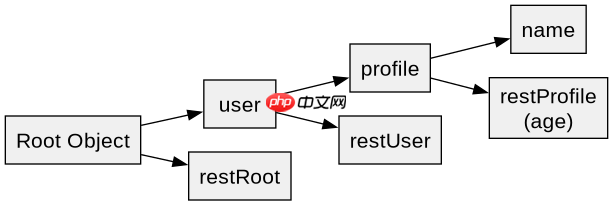
使用展开运算符(...)结合嵌套解构可以简化多层嵌套对象的提取,将不需要深层访问的父级属性直接保留在对象中,而只解构需要的子属性。例如从 { a: { b: { c: 1 } } } 中提取 c 并保留 a 的其他部分,可以使用 const { a: { b, ...resta }, ...restroot } = obj; 的方式,这样既拿到了 b,又通过 resta 保留了 a 中未被解构的属性,同时 restroot 保留了根层级的其他属性。
如何从深层嵌套中提取特定值并保留父级结构?
当需要获取深层属性但又不想丢失中间层级时,可以利用解构赋值中的别名和剩余操作符。假设输入对象为 data = { user: { profile: { name: "Alice", age: 30 } } },目标是拿到 name 且保留 user.profile 的其余部分。代码实现如下:
const data = {
  user: {
    profile: {
      name: "Alice",
      age: 30
    }
  }
};

const { user: { profile: { name, ...profileRest }, ...userRest }, ...rootRest } = data;

console.log(name); // "Alice"
console.log(profileRest); // { age: 30 }
console.log(userRest); // {}
console.log(rootRest); // {}
运行结果:
name: "Alice"
profileRest: { age: 30 }
userRest: {}
rootRest: {}
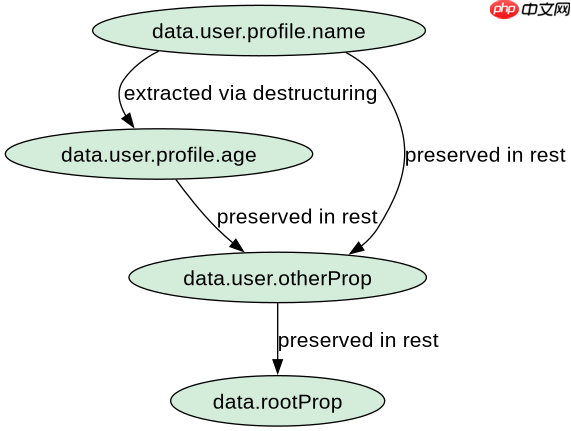
这种写法避免了手动创建临时变量或多次访问 data.user.profile,逻辑更紧凑。
立即学习“Java免费学习笔记(深入)”;

一个基于源码的 OpenAI Agents SDK JavaScript 和 TypeScript 技术文档。涵盖了代理编排、工具、转接、追踪以及实际安装路径。
如何处理嵌套对象中可能缺失的路径而不报错?
如果嵌套层级较深且某些路径可能不存在,直接解构会抛出 TypeError。可以通过提供默认值或使用可选链结合解构来安全处理。例如输入 data = { user: {} },尝试提取 user.profile.name:
const data = {
  user: {}
};

// 方法一:使用默认空对象防止中间层级缺失
const { user: { profile = {}, name = "Unknown" } = {} } = data;

console.log(name); // "Unknown"
console.log(profile); // {}
运行结果:
name: "Unknown"
profile: {}
这里 profile = {} 确保即使 profile 未定义,也会赋值为空对象,从而允许后续对 name 的解构不报错。若 user 本身也不存在,最外层的 = {} 也能兜底。这种方式比逐层判断 if (data && data.user) 更简洁。

基于程序中某个输入、条件或结果的具体问题
在上述示例中,当输入对象 data 的 user 属性为 null 而非 undefined 或缺失时,解构行为会有所不同。测试输入 data = { user: null }:
const data = {
  user: null
};

try {
  const { user: { profile = {}, name = "Unknown" } = {} } = data;
  console.log("Success:", name);
} catch (e) {
  console.log("Error:", e.message);
}
运行结果:
Error: Cannot destructure property 'profile' of 'user' as it is null.
这说明默认值 = {} 仅对 undefined 生效,对 null 无效。因此在使用嵌套解构时,需确保中间层级不为 null,或在解构前进行非空检查。