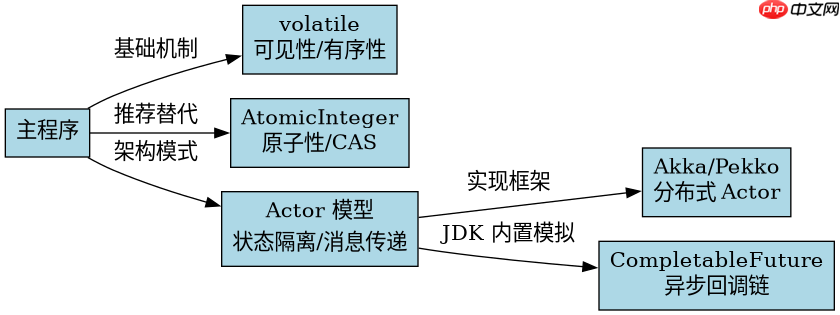
java 中的 volatile 关键字通过提供可见性和有序性来避免共享状态,而 actor 模型则通过隔离状态和消息传递从根本上消除共享。在 java 中,你可以使用 java.util.concurrent.atomic 包下的原子类(如 atomicinteger)结合 volatile 语义来实现无锁并发,或者使用 completablefuture 构建异步 actor 风格的流程。对于真正的 actor 模型,推荐使用 akka 或 pekko 框架,它们将状态封装在 actor 内部,外部只能通过发送消息进行交互,从而彻底避免显式的锁和 volatile 变量管理。
如何在不使用锁的情况下安全地更新共享计数器
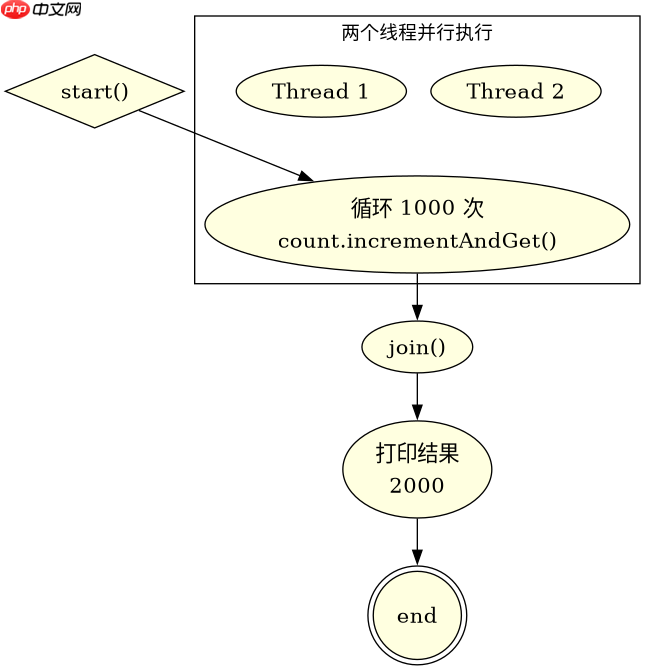
要安全地更新共享计数器而不使用锁,可以使用 AtomicInteger 的 incrementAndGet() 方法。该方法内部利用 CAS(Compare-And-Swap)指令保证原子性,同时隐含了 volatile 的内存屏障效果,确保线程间的可见性。这种方式比手动使用 synchronized 块性能更高,且代码更简洁。
import java.util.concurrent.atomic.AtomicInteger;

public class CounterExample {
    private final AtomicInteger count = new AtomicInteger(0);

    public void increment() {
        // 原子性增加,无需 synchronized
        count.incrementAndGet();
    }

    public int getCount() {
        return count.get();
    }

    public static void main(String[] args) throws InterruptedException {
        CounterExample example = new CounterExample();
        Thread t1 = new Thread(() -> {
            for (int i = 0; i < 1000; i++) {
                example.increment();
            }
        });
        Thread t2 = new Thread(() -> {
            for (int i = 0; i < 1000; i++) {
                example.increment();
            }
        });
        t1.start();
        t2.start();
        t1.join();
        t2.join();
        System.out.println("Final Count: " + example.getCount());
    }
}
运行上述代码,预期输出为 Final Count: 2000。这验证了 AtomicInteger 在多核环境下能正确累加,避免了竞态条件。与直接使用 volatile int 不同,volatile 只能保证读写的可见性,不能保证复合操作(如自增)的原子性,因此必须使用原子类。

一个围绕官方 Mailgun JavaScript SDK 构建的 ASE 技能,用于从 Node.js 发送电子邮件和管理 Mailgun API 工作流。它适用于需要事务性消息传递、域名感知电子邮件操作、事件处理以及与 Mailgun 平台直接集成的代理任务。
立即学习“Java免费学习笔记(深入)”;
如何使用 CompletableFuture 实现简单的 Actor 式任务链
要模拟 Actor 模型的任务处理流,可以使用 CompletableFuture 的 thenApplyAsync 和 thenAcceptAsync 方法。这些方法允许你将任务提交到不同的线程池执行,并通过回调函数连接各个阶段,形成类似消息传递的处理链。每个阶段只依赖前一个阶段的输出,不共享可变状态,从而实现解耦。

import java.util.concurrent.CompletableFuture;
import java.util.concurrent.ExecutorService;
import java.util.concurrent.Executors;

public class ActorStyleExample {
    private static final ExecutorService executor = Executors.newFixedThreadPool(4);

    public static void main(String[] args) {
        CompletableFuture<String> future = CompletableFuture.supplyAsync(() -> {
            System.out.println("Step 1: Fetching data");
            return "Data";
        }, executor)
        .thenApplyAsync(data -> {
            System.out.println("Step 2: Processing data: " + data);
            return data.toUpperCase();
        }, executor)
        .thenAcceptAsync(result -> {
            System.out.println("Step 3: Final result: " + result);
        }, executor);

        // 等待所有任务完成
        future.join();
        executor.shutdown();
    }
}
运行上述代码,预期输出顺序大致为:Step 1: Fetching dataStep 2: Processing data: DataStep 3: Final result: DATA
这表明任务按顺序在不同线程中执行,且没有共享可变状态。每个阶段接收前一个阶段的返回值作为输入,类似于 Actor 之间的消息传递。
当 CompletableFuture 遇到空值或异常时如何处理
当 CompletableFuture 链中的某个步骤返回 null 或抛出异常时,后续步骤的行为取决于你使用的组合方法。如果使用 thenApply,传入 null 会导致后续步骤接收到 null;如果抛出异常,整个链会进入异常状态,除非你使用了 exceptionally 或 handle 方法进行恢复。为了保持 Actor 模型的健壮性,建议在关键节点添加 exceptionally 处理器,将异常转换为默认值或日志记录,避免中断整个流程。
import java.util.concurrent.CompletableFuture;
import java.util.concurrent.ExecutionException;

public class ExceptionHandlingExample {
    public static void main(String[] args) {
        CompletableFuture<String> future = CompletableFuture.supplyAsync(() -> {
            throw new RuntimeException("Simulated Error");
        }).exceptionally(ex -> {
            System.err.println("Caught exception: " + ex.getMessage());
            return "Fallback Value";
        }).thenApply(result -> {
            System.out.println("Processing: " + result);
            return result + " Processed";
        });

        try {
            String result = future.get();
            System.out.println("Final Result: " + result);
        } catch (InterruptedException | ExecutionException e) {
            e.printStackTrace();
        }
    }
}
运行上述代码,预期输出为:Caught exception: Simulated ErrorProcessing: Fallback ValueFinal Result: Fallback Value Processed
这展示了 exceptionally 如何捕获异常并提供回退值,确保流程继续执行。如果不使用 exceptionally,future.get() 将抛出 ExecutionException。