在shadow dom中,:host 伪类用于选择并设置 shadow root 内部的宿主元素(即包含 shadow dom 的那个自定义元素本身)。要使用它进行穿透或样式应用,只需在 <style></style> 标签内直接使用 :host 选择器即可。这允许你从 shadow dom 内部直接控制外部元素的样式,例如背景色、边框或布局属性,而无需暴露这些样式到全局 css 中。

:host 如何与子元素选择器配合实现嵌套样式穿透?
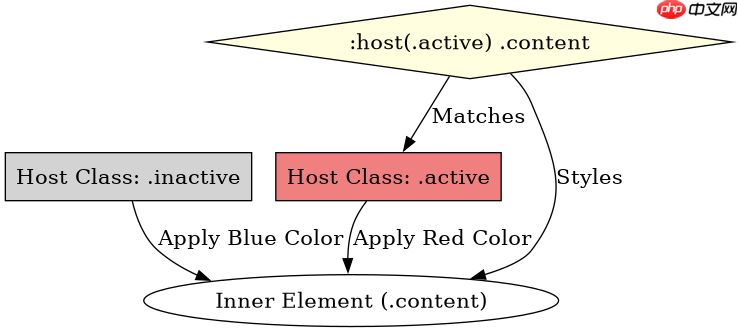
:host 可以与子元素选择器组合使用,以同时控制宿主元素及其内部特定子元素的样式。例如,你可以使用 :host(.active) .content 来仅当宿主元素具有 .active 类时,才改变其内部 .content 元素的样式。这种组合方式实现了样式的“穿透”效果,使得外部状态能够影响内部结构,同时保持封装性。
<template id="my-element-template">
  <style>
    :host {
      display: block;
      padding: 10px;
      border: 1px solid #ccc;
    }
    :host(.highlight) {
      background-color: yellow;
    }
    :host .inner-text {
      color: blue;
    }
    :host(.highlight) .inner-text {
      color: red;
    }
  </style>
  <div class="inner-text">Hello World</div>
</template>

<script>
class MyElement extends HTMLElement {
  constructor() {
    super();
    const template = document.getElementById('my-element-template');
    const shadowRoot = this.attachShadow({ mode: 'open' });
    shadowRoot.appendChild(template.content.cloneNode(true));
  }
}
customElements.define('my-element', MyElement);
</script>

<!-- Usage -->
<my-element class="highlight"></my-element>
:host() 函数式语法如何处理多个宿主条件?
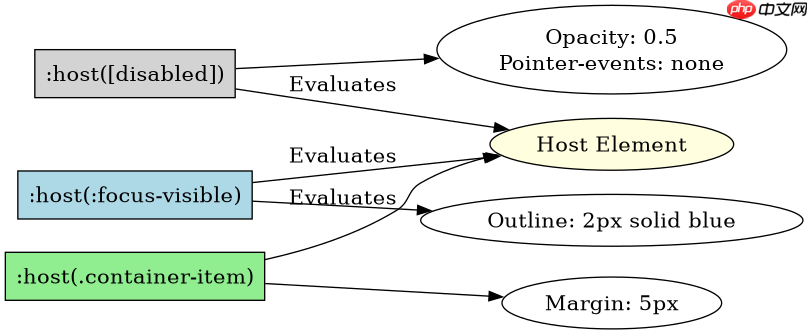
当需要根据多种不同的类名或属性条件来应用不同样式时,可以使用 :host() 函数式语法。例如,:host([disabled]) 会选择具有 disabled 属性的宿主元素,而 :host(:hover) 则针对鼠标悬停状态。这种语法提供了更灵活的穿透控制,允许开发者根据宿主元素的动态状态精确调整内部样式表现。

htmlq 是一个命令行工具,使用 CSS 选择器从 HTML 中提取内容,相当于 jq 的 HTML 版本。该工具使用 Rust 编写,允许你通过 CSS 选择器将 HTML 管道化,直接从终端提取文本、属性和结构化内容。
立即学习“前端免费学习笔记(深入)”;
<template id="advanced-host-template">
  <style>
    /* 基础宿主样式 */
    :host {
      transition: all 0.3s ease;
    }

    /* 当宿主被禁用时 */
    :host([disabled]) {
      opacity: 0.5;
      pointer-events: none;
    }

    /* 当宿主处于焦点状态时 */
    :host(:focus-visible) {
      outline: 2px solid blue;
    }

    /* 当宿主是某个父级容器的子项时 */
    :host(.container-item) {
      margin: 5px;
    }
  </style>
  <button>Click Me</button>
</template>

<script>
class AdvancedHostElement extends HTMLElement {
  constructor() {
    super();
    const template = document.getElementById('advanced-host-template');
    const shadowRoot = this.attachShadow({ mode: 'open' });
    shadowRoot.appendChild(template.content.cloneNode(true));
  }
}
customElements.define('advanced-host-element', AdvancedHostElement);
</script>

<!-- Usage -->
<div class="container">
  <advanced-host-element disabled></advanced-host-element>
  <advanced-host-element class="container-item"></advanced-host-element>
</div>
基于 :host 的样式隔离特性如何解决全局样式冲突?
:host 的核心价值在于其样式隔离能力。由于 Shadow DOM 默认阻止外部 CSS 规则进入内部,:host 成为唯一能从内部修改宿主元素样式的途径。这意味着即使全局 CSS 中存在同名类或标签选择器,也不会意外影响到 Shadow DOM 内的宿主元素,除非显式使用 :host 或 ::slotted()。这种机制有效避免了样式污染和冲突,确保了组件样式的可预测性和稳定性。