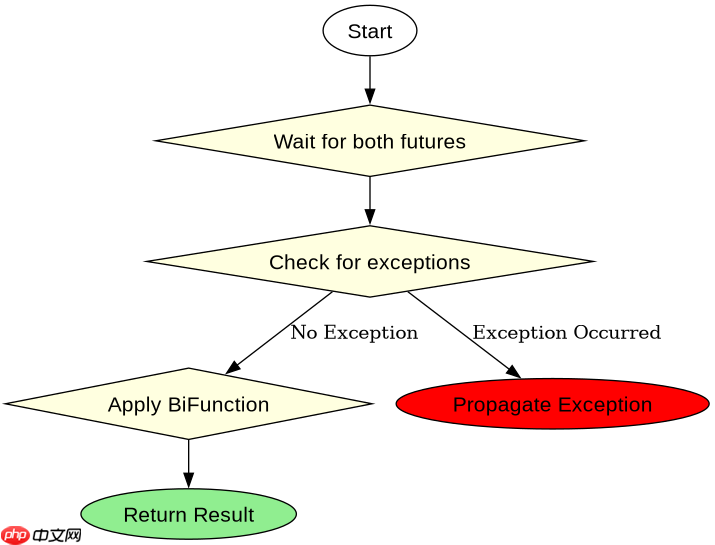
使用 thencombine 可以将两个独立的 completablefuture 结果合并,通过传入一个 bifunction 对两者的返回值进行计算并生成新的 completablefuture。调用时只需传入另一个异步任务对象和具体的合并逻辑函数,该操作会在两个任务都完成后自动执行。

如何定义合并逻辑与处理异常
在 thenCombine 中,第二个参数是 BiFunction<t u r></t>,它接收前一个任务的返回值作为第一个参数,后一个任务的返回值作为第二个参数,返回合并后的结果。如果其中一个任务抛出异常,合并逻辑将不会执行,而是直接传播异常到最终的 exceptionally 或 handle 回调中。
import java.util.concurrent.CompletableFuture;

public class CombineExample {
    public static void main(String[] args) {
        CompletableFuture<String> futureA = CompletableFuture.supplyAsync(() -> "Hello");
        CompletableFuture<String> futureB = CompletableFuture.supplyAsync(() -> "World");

        CompletableFuture<String> combined = futureA.thenCombine(futureB, (resA, resB) -> resA + " " + resB);

        System.out.println(combined.join()); // 输出: Hello World
    }
}
如何处理合并过程中的空值或缺失数据
当参与合并的任务可能返回 null 或尚未完成时,thenCombine 依然会等待所有依赖项完成。若某个上游任务因异常终止,合并步骤会被跳过。可以通过在 supplyAsync 内部捕获异常或使用 completeExceptionally 来控制流程,确保传入 BiFunction 的参数符合预期类型。

一个围绕官方 Mailgun JavaScript SDK 构建的 ASE 技能,用于从 Node.js 发送电子邮件和管理 Mailgun API 工作流。它适用于需要事务性消息传递、域名感知电子邮件操作、事件处理以及与 Mailgun 平台直接集成的代理任务。
立即学习“Java免费学习笔记(深入)”;

import java.util.concurrent.CompletableFuture;

public class NullHandlingExample {
    public static void main(String[] args) {
        CompletableFuture<Integer> futureA = CompletableFuture.supplyAsync(() -> null);
        CompletableFuture<Integer> futureB = CompletableFuture.supplyAsync(() -> 10);

        CompletableFuture<Integer> combined = futureA.thenCombine(futureB, (a, b) -> {
            if (a == null) return b * 2;
            return a + b;
        });

        System.out.println(combined.join()); // 输出: 20
    }
}
基于输入为null时的具体行为验证
当 thenCombine 的第一个参数对应的 CompletableFuture 结果为 null 时,BiFunction 的对应参数也会接收到 null。此时需要在合并逻辑内部显式处理 null 情况,否则可能引发 NullPointerException。上述代码已演示了如何在逻辑层面对 null 进行防御性编程。