try-with-resources 中 Closeable 如何区分异常
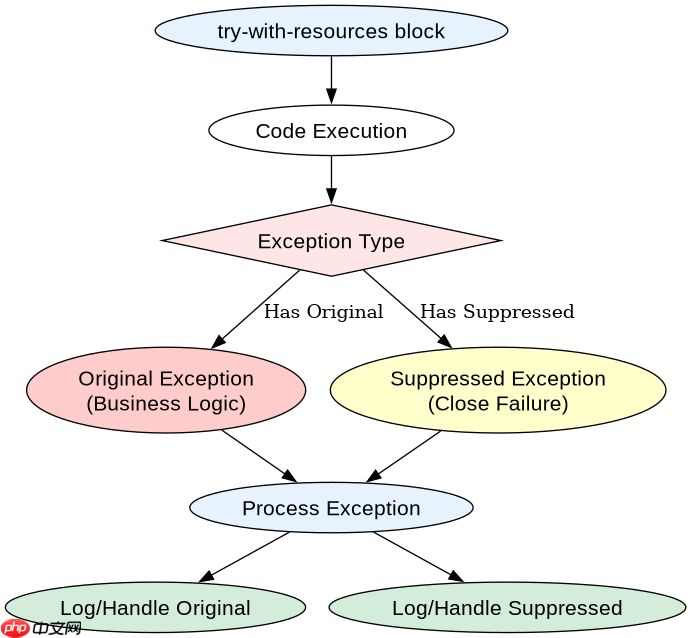
try-with-resources 通过自动调用资源的 close() 方法来管理资源,当资源关闭时抛出异常,该异常会被作为“抑制异常”(suppressed exception)附加到主流程抛出的原始异常上。要区分这两种异常,需要捕获顶层的 exception,检查其 getsuppressed() 方法返回的数组。如果数组非空,说明在资源关闭阶段发生了异常,可以通过遍历数组获取具体的关闭异常;如果数组为空,则说明没有发生关闭异常,此时捕获到的就是业务逻辑中的原始异常。

如何编程提取并处理这些异常
在实际代码中,我们通常在一个 catch 块中统一处理所有异常。首先判断 exception.getSuppressed().length > 0,如果为真,则从数组中提取第一个或所有的抑制异常进行处理(例如记录日志或标记资源关闭失败)。如果为假,则直接处理原始的业务异常。这种模式确保了无论异常来源是业务逻辑还是资源清理,都能被正确识别和分类。

一个围绕官方 Mailgun JavaScript SDK 构建的 ASE 技能,用于从 Node.js 发送电子邮件和管理 Mailgun API 工作流。它适用于需要事务性消息传递、域名感知电子邮件操作、事件处理以及与 Mailgun 平台直接集成的代理任务。
import java.io.*;

public class ResourceTest {
    public static void main(String[] args) {
        try {
            // 模拟一个会抛出关闭异常的 Closeable 资源
            AutoCloseable resource = new AutoCloseable() {
                @Override
                public void close() throws Exception {
                    throw new IOException("Resource close failed");
                }
            };

            try (resource) {
                // 模拟业务逻辑抛出异常
                throw new RuntimeException("Business logic error");
            }
        } catch (Exception e) {
            System.out.println("Original: " + e.getClass().getSimpleName());
            System.out.println("Message: " + e.getMessage());

            Throwable[] suppressed = e.getSuppressed();
            if (suppressed.length > 0) {
                System.out.println("Suppressed count: " + suppressed.length);
                for (Throwable t : suppressed) {
                    System.out.println("Suppressed: " + t.getClass().getSimpleName());
                    System.out.println("Suppressed Message: " + t.getMessage());
                }
            } else {
                System.out.println("No suppressed exceptions.");
            }
        }
    }
}
运行上述代码,输出将显示:
- Original: RuntimeException
- Message: Business logic error
- Suppressed count: 1
- Suppressed: IOException
- Suppressed Message: Resource close failed
这证实了原始异常是 RuntimeException,而关闭时的 IOException 被作为抑制异常附加其上。
当只有关闭异常而没有业务异常时会发生什么
如果在 try 块内部没有抛出任何异常,但 close() 方法抛出了异常,那么捕获到的异常对象本身就是那个关闭异常。此时 getSuppressed() 返回的数组为空,因为不存在“原始异常”来承载它。在这种情况下,直接处理捕获到的异常即可,无需检查抑制异常列表,因为它就是唯一的异常源。
立即学习“Java免费学习笔记(深入)”;

import java.io.*;

public class ResourceTest2 {
    public static void main(String[] args) {
        try {
            AutoCloseable resource = new AutoCloseable() {
                @Override
                public void close() throws Exception {
                    throw new IOException("Resource close failed");
                }
            };

            try (resource) {
                // 业务逻辑正常,不抛出异常
                System.out.println("Business logic executed successfully");
            }
        } catch (Exception e) {
            System.out.println("Caught: " + e.getClass().getSimpleName());
            System.out.println("Message: " + e.getMessage());

            Throwable[] suppressed = e.getSuppressed();
            if (suppressed.length > 0) {
                System.out.println("This branch should not be taken in this scenario.");
            } else {
                System.out.println("No suppressed exceptions, caught exception is the original one.");
            }
        }
    }
}
运行上述代码,输出将显示: - Caught: IOException - Message: Resource close failed - No suppressed exceptions, caught exception is the original one. 这表明当没有业务异常时,捕获到的就是关闭异常本身,且抑制列表为空。