


在goframe框架中定义orm模型,核心做法是创建继承自 g.model 的结构体,并通过结构体标签(如 table、autotime)配置表名和字段行为。具体实现时,需确保结构体字段与数据库列名对应,并在初始化模型实例后调用 tablename() 方法指定实际表名。这样做能自动处理主键、时间戳等常见逻辑,简化crud操作。

如何为模型设置自定义表名?
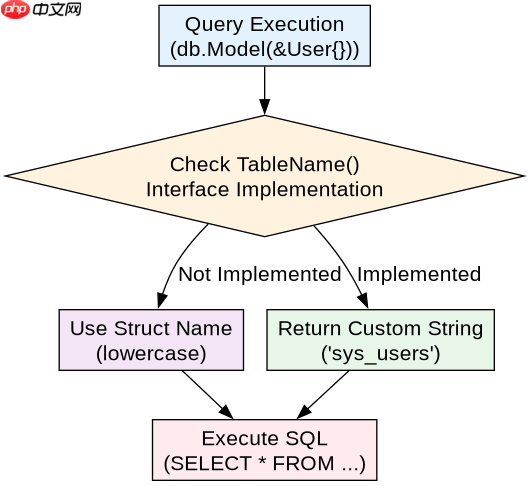
通过实现 TableName() 接口并返回字符串常量,即可将模型映射到任意数据库表。例如,若默认表名为 users,但实际数据存储在 sys_users 表中,只需在结构体上添加该方法即可覆盖默认行为,无需修改查询语句中的表名部分。

package main

import (
    "context"
    "github.com/gogf/gf/v2/database/gdb"
    "github.com/gogf/gf/v2/frame/g"
)

type User struct {
    g.Meta `orm:"table:sys_users, do:true"`
    Id     int64  `json:"id"`
    Name   string `json:"name"`
}

func (u *User) TableName() string {
    return "sys_users"
}

func main() {
    ctx := context.Background()
    db := g.DB()
    var users []User
    db.Model(&User{}).Ctx(ctx).Scan(&users)
}
如何实现字段的自动填充功能?
利用结构体标签 autoCreateTime 和 autoUpdateTime 可让框架自动维护时间字段。当插入新记录时,指定 autoCreateTime 的字段会被填入当前时间;更新记录时,指定 autoUpdateTime 的字段会自动刷新。这避免了手动赋值时间戳的繁琐步骤,确保数据一致性。

package main

import (
    "context"
    "time"
    "github.com/gogf/gf/v2/frame/g"
)

type Article struct {
    g.Meta      `orm:"table:articles, do:true"`
    Id          int64     `json:"id"`
    Title       string    `json:"title"`
    CreatedAt   time.Time `json:"created_at" orm:"autoCreateTime"`
    UpdatedAt   time.Time `json:"updated_at" orm:"autoUpdateTime"`
}

func main() {
    ctx := context.Background()
    db := g.DB()
    article := &Article{Title: "Test"}
    db.Model(article).Ctx(ctx).Data(g.Map{"title": article.Title}).Insert()
}
基于程序中某个输入、条件或结果的具体问题:当使用 g.Meta 标签但未实现 TableName() 时会发生什么?
如果定义了 g.Meta 标签但未实现 TableName() 方法,GoFrame ORM 会尝试使用结构体名称的小写形式作为表名。例如,结构体 User 会映射到 user 表。若该表不存在或名称不匹配,查询将报错。因此,显式实现 TableName() 是确保映射准确性的关键步骤。