



为什么CSS绝对定位父级没有设置relative却能在全局正确定位?
css中绝对定位(absolute)元素的参考系是最近的已定位祖先元素,如果所有祖先都没有设置 position 属性(即默认为 static),则最终会相对于初始包含块(通常是 html 或 body)进行定位。因此,即使直接父级未设置 relative,只要其祖先链中存在一个设置了 position: relative/absolute/fixed 的元素,或者一直追溯到根元素,绝对定位元素都能找到正确的参照物并“全局”定位。
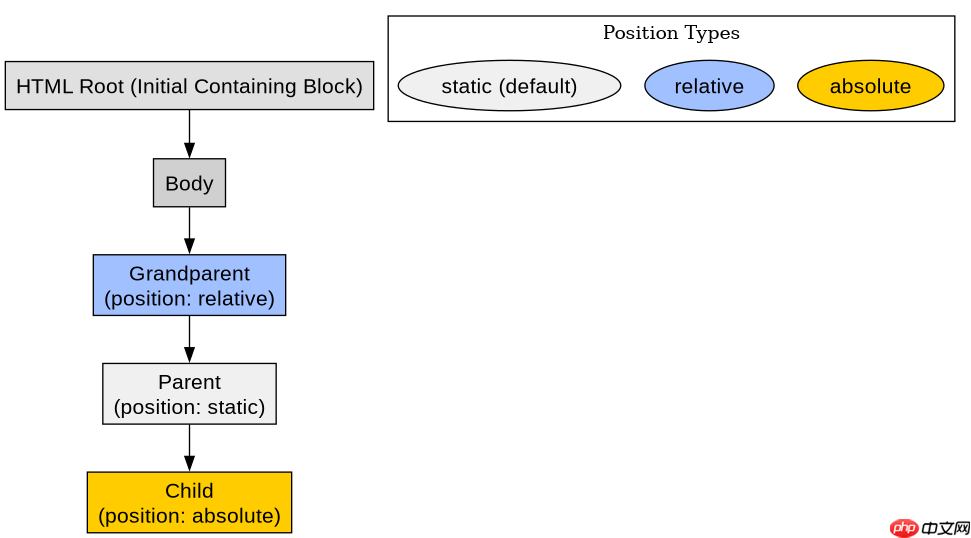
哪些祖先元素会成为绝对定位的参考系?
当绝对定位元素向上查找已定位祖先时,它会跳过所有 position: static 的元素,直到找到一个 position 值为 relative、absolute、fixed 或 sticky 的祖先。如果找不到任何这样的祖先,它将相对于视口(viewport)或初始包含块定位。这意味着,只有显式设置了非 static 定位属性的祖先才会成为参考系,而默认的 static 属性会被忽略。


<!DOCTYPE html>
<html lang="en">
<head>
    <meta charset="UTF-8">
    <title>Absolute Positioning Demo</title>
    <style>
        /* 父容器未设置position,默认为static */
        .parent {
            width: 300px;
            height: 300px;
            background-color: #f0f0f0;
            border: 1px solid #ccc;
        }

        /* 子元素使用absolute定位 */
        .child {
            position: absolute;
            top: 50px;
            left: 50px;
            width: 100px;
            height: 100px;
            background-color: blue;
            color: white;
        }

        /* 祖父元素设置了relative,成为参考系 */
        .grandparent {
            position: relative;
            padding: 20px;
            border: 2px dashed orange;
        }
    </style>
</head>
<body>
    <div class="grandparent">
        <div class="parent">
            <div class="child">Child</div>
        </div>
    </div>
</body>
</html>
如果没有已定位祖先,绝对定位元素会如何表现?
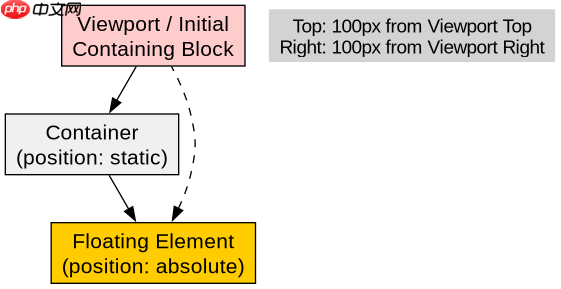
如果从绝对定位元素向上追溯,没有任何祖先元素设置 position 为非 static 值,那么该元素将相对于初始包含块(initial containing block)进行定位。在大多数情况下,初始包含块对应于浏览器视口(viewport),即屏幕可见区域。此时,top、left 等偏移量是相对于视口的左上角计算的,而不是相对于某个局部容器。这种行为常用于全屏覆盖层或固定位置的弹窗组件。
立即学习“前端免费学习笔记(深入)”;
<!DOCTYPE html>
<html lang="en">
<head>
    <meta charset="UTF-8">
    <title>Absolute Positioning Without Ancestor</title>
    <style>
        /* 所有祖先均为static,无已定位祖先 */
        .container {
            width: 400px;
            height: 400px;
            background-color: lightgreen;
            margin: 50px auto;
        }

        .floating {
            position: absolute;
            top: 100px;
            right: 100px;
            width: 80px;
            height: 80px;
            background-color: red;
            color: white;
        }
    </style>
</head>
<body>
    <div class="container">
        <div class="floating">Floating</div>
    </div>
</body>
</html>