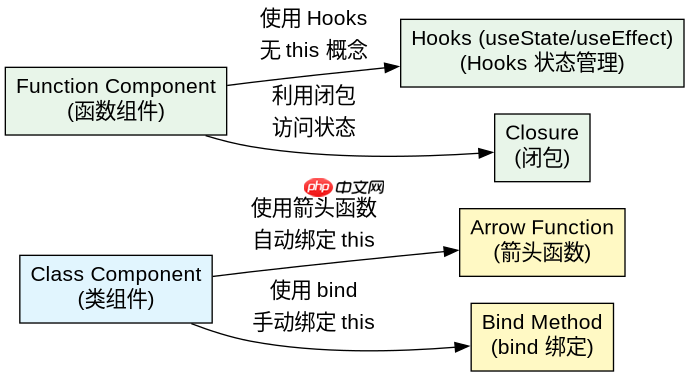
在 react 中,`this` 的指向取决于组件的定义方式。对于类组件(class components),必须通过构造函数中的 `super(props)` 初始化上下文,并在方法定义时绑定 `this`,或者使用箭头函数作为类属性来确保 `this` 始终指向当前组件实例;对于函数组件(function components),由于没有 `this` 关键字,通常使用 hooks 和闭包来处理状态与行为。
类组件中 this 丢失的原因是什么
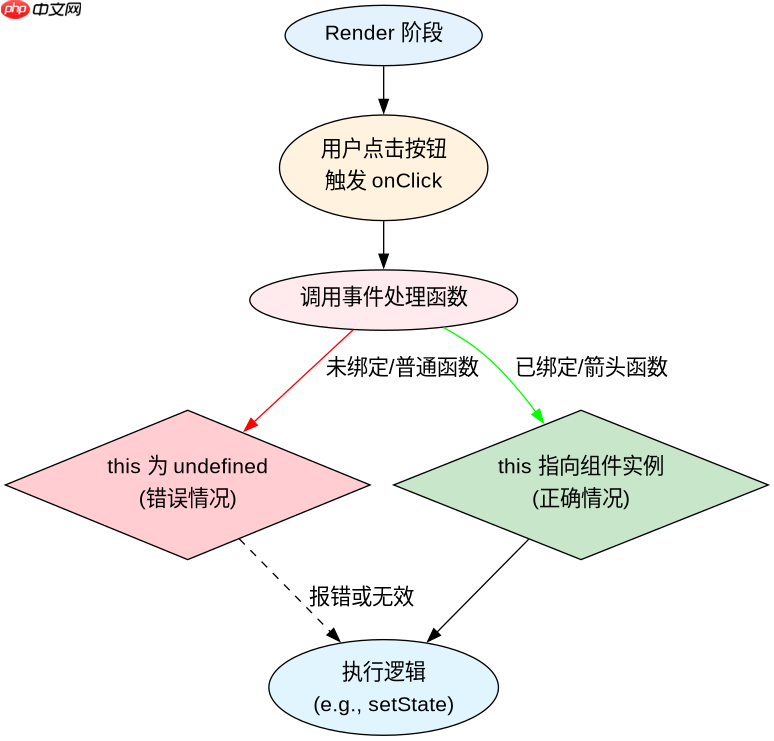
类组件中 `this` 丢失是因为 JavaScript 中普通函数的调用机制会改变 `this` 的绑定目标。当你在 JSX 中将一个未绑定的方法作为回调传递时,该方法被当作普通函数调用,此时 `this` 为 `undefined`(严格模式下)或全局对象。解决方法是在构造函数中使用 `bind` 或在类属性中使用箭头函数。
class Button extends React.Component {
  constructor(props) {
    super(props);
    // 方案一:在构造函数中绑定
    this.handleClick = this.handleClick.bind(this);
  }

  handleClick() {
    console.log(this); // 指向 Button 实例
  }

  render() {
    return <button onClick={this.handleClick}>Click</button>;
  }
}

// 方案二:使用箭头函数(推荐)
class Button2 extends React.Component {
  handleClick = () => {
    console.log(this); // 自动指向 Button2 实例
  }

  render() {
    return <button onClick={this.handleClick}>Click</button>;
  }
}
函数组件如何处理类似 this 的状态访问
函数组件不使用 `this`,而是通过 `useState` 和 `useEffect` 等 Hooks 来管理状态和副作用。函数组件中的变量通过闭包捕获,每次渲染都会创建新的作用域,因此不需要担心 `this` 指向问题。如果需要访问最新的状态值,可以使用 `useRef` 或依赖数组来控制重渲染。

你是 TypeScript 项目架构专家,专注于脚手架搭建生产就绪的 Node.js 和前端应用。生成包含现代工具链(pnpm、Vite、Next.js)、类型
立即学习“Java免费学习笔记(深入)”;

import React, { useState, useEffect } from 'react';

function Counter() {
  const [count, setCount] = useState(0);

  // 模拟 componentDidMount
  useEffect(() => {
    document.title = `You clicked ${count} times`;
  }, [count]);

  // 模拟 componentDidUpdate
  useEffect(() => {
    console.log('Count changed to:', count);
  }, [count]);

  return (
    <div>
      <p>You clicked {count} times</p>
      <button onClick={() => setCount(count + 1)}>
        Click me
      </button>
    </div>
  );
}
为什么箭头函数能正确绑定 this
箭头函数不绑定自己的 `this`,它捕获其所在词法作用域的 `this` 值。在类组件中,当你在类属性上使用箭头函数时,该函数在定义时就捕获了类实例的 `this`,因此无论在哪里调用,`this` 都指向正确的组件实例。这是现代 React 开发中最推荐的绑定方式,因为它简洁且不易出错。