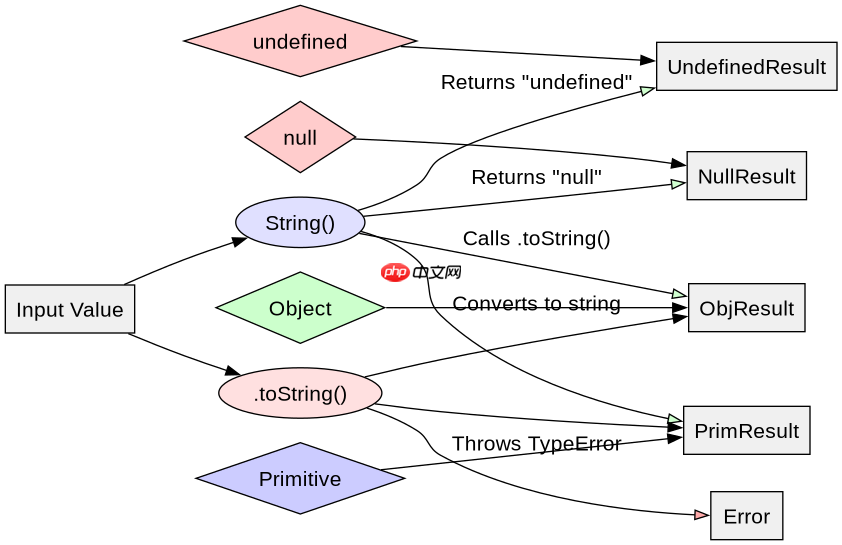
在 javascript 中,将对象转换为字符串主要依赖 tostring() 方法或全局的 string() 函数。两者的核心区别在于对 null 和 undefined 的处理:string() 能安全地将它们转为 "null" 和 "undefined",而直接调用这两个值的 tostring() 会报错。对于普通对象,两者通常返回相同的默认字符串表示,但通过原型链自定义 tostring() 的对象在使用 string() 时依然会优先触发该方法。
如何安全处理 null 和 undefined 的转换
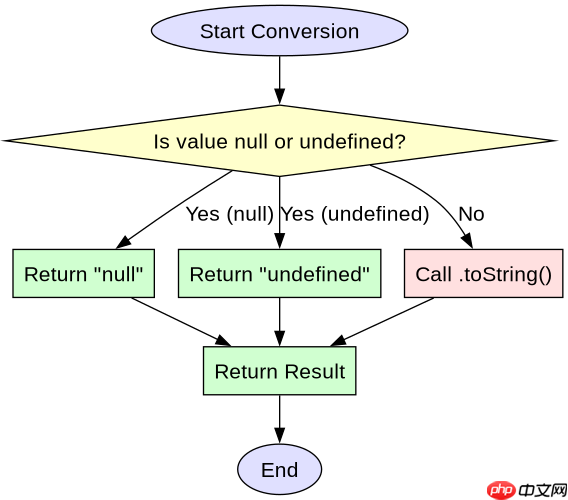
使用 String() 函数是处理可能为 null 或 undefined 变量的首选方式,因为它不会抛出错误。当输入值为 null 时,String(null) 返回字符串 "null";当输入值为 undefined 时,String(undefined) 返回字符串 "undefined"。相比之下,如果尝试调用 null.toString() 或 undefined.toString(),JavaScript 引擎会抛出 TypeError,因为原始值没有属性或方法。这种差异使得 String() 在数据清洗或模板渲染等不确定变量类型的场景中更为稳健。
console.log(String(null)); // "null"
console.log(String(undefined)); // "undefined"
// console.log(null.toString()); // TypeError: Cannot read properties of null
对象类型转换时的原型链行为
当对普通对象使用 String() 时,它会尝试调用对象的 toString() 方法。如果对象没有自定义 toString(),则使用默认的 Object.prototype.toString(),返回 "[object Object]"。如果对象重写了 toString(),String() 会执行该自定义方法并返回其结果。这一机制确保了开发者可以通过定义 toString() 来控制对象在字符串上下文中的表现,例如在数组拼接或模板字符串中使用。

立即学习“Java免费学习笔记(深入)”;

const obj = { name: "test" };
console.log(String(obj)); // "[object Object]"

const customObj = {
  toString() { return "Custom String"; }
};
console.log(String(customObj)); // "Custom String"
基于自定义 toString 返回值的具体问题
当对象的 toString() 方法返回一个非字符串类型的值(如数字或布尔值)时,String() 会将该返回值强制转换为字符串。例如,如果 toString() 返回数字 42,String() 最终会得到 "42"。这种行为符合 ECMAScript 规范中关于 ToPrimitive 和 ToString 的抽象操作规则,即先获取原始值,再将其转换为字符串。因此,即使 toString() 的实现看似“错误”,String() 也能保证最终输出始终是字符串类型,避免类型错误。