在 java 中,使用 try-catch 处理异常的标准做法是将可能抛出异常的代码包裹在 try 块中,并在紧随其后的 catch 块中捕获并处理特定类型的异常。通过这种方式,程序可以在发生错误时避免崩溃,转而执行预定义的恢复逻辑或日志记录。如果未指定具体的异常类型,catch 会捕获所有可检查的异常;若需区分不同错误,则应按从具体到通用的顺序排列多个 catch 块。

try-catch 如何捕获和处理运行时异常
当代码执行过程中出现如空指针或数组越界等运行时异常时,try-catch 机制会立即中断当前方法的正常执行流,并将控制权转移至匹配的 catch 块。开发者需要在 catch 块中定义针对该异常的处理策略,例如打印堆栈跟踪、返回默认值或记录日志。这种处理方式确保了程序的健壮性,使应用能够在非致命错误发生后继续运行或优雅退出。
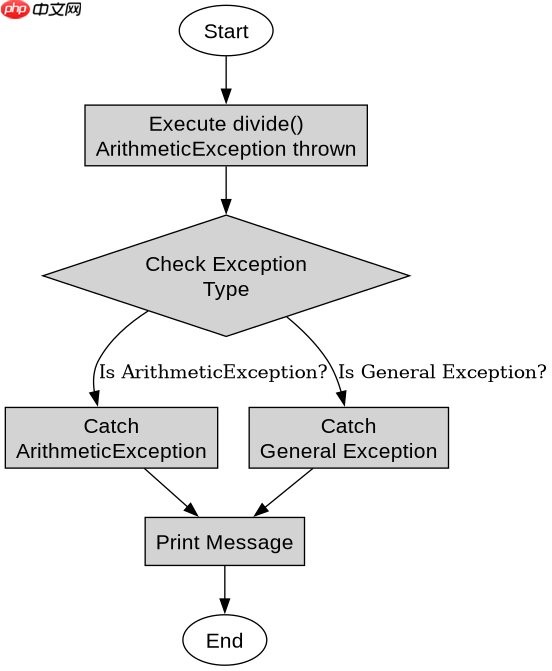
public class ExceptionDemo {
    public static void main(String[] args) {
        try {
            int result = divide(10, 0);
            System.out.println("Result: " + result);
        } catch (ArithmeticException e) {
            System.out.println("Caught ArithmeticException: " + e.getMessage());
        } catch (Exception e) {
            System.out.println("Caught general Exception: " + e.getMessage());
        }
    }

    public static int divide(int a, int b) {
        return a / b;
    }
}
如何处理需要清理资源的受检异常
对于文件 I/O 或数据库连接等资源操作,Java 要求必须处理 IOException 等受检异常。除了传统的 try-catch-finally 结构外,推荐使用 try-with-resources 语法来自动管理资源。在这种模式下,资源会在 try 块结束时自动关闭,即使发生了异常也能确保资源被正确释放,从而简化了代码结构并减少了资源泄漏的风险。

立即学习“Java免费学习笔记(深入)”;
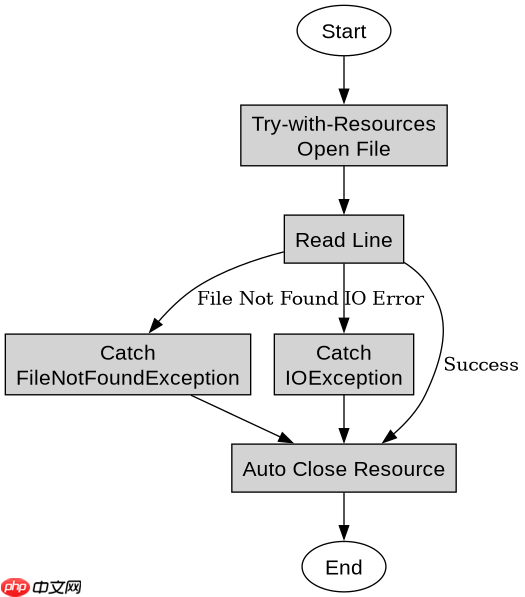
import java.io.*;

public class ResourceDemo {
    public static void main(String[] args) {
        // 使用 try-with-resources 自动关闭资源
        try (BufferedReader reader = new BufferedReader(new FileReader("test.txt"))) {
            String line = reader.readLine();
            System.out.println("Read line: " + line);
        } catch (FileNotFoundException e) {
            System.out.println("File not found: " + e.getMessage());
        } catch (IOException e) {
            System.out.println("IO error: " + e.getMessage());
        }
    }
}
当 finally 块中包含 return 语句时会发生什么
在 try-catch-finally 结构中,finally 块无论是否发生异常都会执行。如果 finally 块中包含 return 语句,它将覆盖 try 或 catch 块中的返回值。这意味着即使 try 块中已经返回了一个结果,finally 中的 return 也会成为最终的返回值。这种行为可能导致意外的结果,因此在实际开发中应避免在 finally 块中使用 return 语句。