

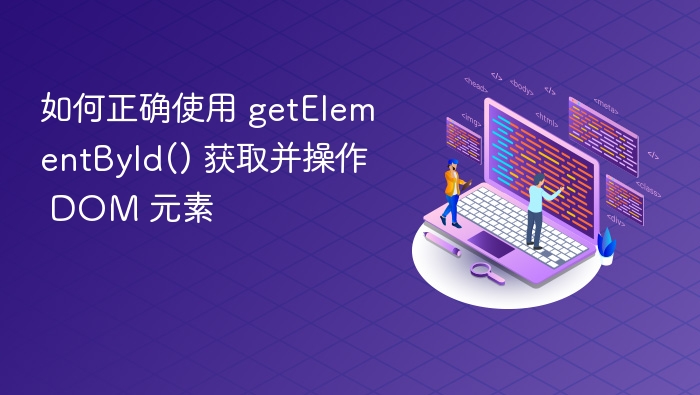
本文详解 getElementById() 的正确用法,包括元素获取时机、ID 唯一性校验、属性与样式设置的区别,并指出常见错误(如误用 setAttribute 设置 CSS 样式)及修复方案。
本文详解 `getelementbyid()` 的正确用法,包括元素获取时机、id 唯一性校验、属性与样式设置的区别,并指出常见错误(如误用 `setattribute` 设置 css 样式)及修复方案。
document.getElementById() 是 Web 开发中最基础也最常用的 DOM 查询方法之一,用于根据唯一 ID 获取页面中的单个 HTML 元素。但其“看似简单,实则易错”——尤其在元素加载顺序、ID 拼写、以及后续操作方式上稍有不慎,就会导致 null 引用或界面无响应。
✅ 正确调用的前提:确保元素已存在
getElementById() 不会等待 DOM 加载完成。若脚本在 内容渲染前执行(例如 中引入且未加 defer),将返回 null。推荐做法是:
- 将
<script></script>放在闭合标签之前(如题中所示),或 - 使用
DOMContentLoaded事件:
document.addEventListener('DOMContentLoaded', () => {
  const upButton = document.getElementById('up');
  const downButton = document.getElementById('down');
  if (upButton && downButton) {
    initialize(upButton, downButton);
  }
});
⚠️ 注意:题中代码存在一个关键笔误——
downButton实际被错误地赋值为document.getElementById("up")(重复 ID),应修正为"down",否则downButton将引用错误元素,导致后续操作失效。
✅ 正确操作样式:用 .style,而非 setAttribute
HTML 元素的 width、left、top 等视觉表现由 CSS 样式(CSSOM) 控制,而非 HTML 属性。setAttribute('width', '300px') 仅添加自定义属性(如 <button width="300px"></button>),对布局完全无效(浏览器不识别该属性)。
✅ 正确方式是操作元素的 style 对象:
function initialize(upBtn, downBtn) {
  // ✅ 直接设置内联 CSS 样式
  upBtn.style.width = '300px';
  upBtn.style.position = 'absolute'; // left/top 需要 position: absolute/fixed/relative
  upBtn.style.left = `${Math.floor(Math.random() * 1000)}px`;

  downBtn.style.position = 'absolute';
  downBtn.style.top = `${Math.floor(Math.random() * 1000)}px`;
  downBtn.style.left = `${Math.floor(Math.random() * 1000)}px`;
}
同时,建议在 CSS 中预设基础定位规则(避免 JS 中重复设置):
#up, #down {
  position: absolute;
}
这样既保持语义清晰,又提升可维护性。
? 调试技巧:快速验证获取是否成功
在操作前加入防御性检查,避免运行时错误:
const upButton = document.getElementById('up');
if (!upButton) {
  console.error('❌ Element with ID "up" not found. Check HTML spelling and script placement.');
  return;
}
也可在浏览器控制台直接输入 document.getElementById('up') 实时验证返回值。
✅ 完整可运行示例
<!-- index.html -->
<body>
  <button type="button" id="up">Increase Volume</button>
  <button type="button" id="down">Decrease Volume</button>
  <script src="final.js"></script>
</body>
// final.js
const upButton = document.getElementById('up');
const downButton = document.getElementById('down'); // ✅ 修正 ID

if (!upButton || !downButton) {
  throw new Error('Required elements not found.');
}

function initialize() {
  upButton.style.width = '300px';
  upButton.style.left = `${Math.floor(Math.random() * 800)}px`;

  downButton.style.top = `${Math.floor(Math.random() * 600)}px`;
  downButton.style.left = `${Math.floor(Math.random() * 800)}px`;
}

initialize();
? 提示:若需更灵活的样式控制(如批量修改、响应式适配),推荐使用
classList.add()配合 CSS 类,而非硬编码style属性。
掌握 getElementById() 的正确姿势,是构建可靠交互逻辑的第一步——它不仅是“取元素”,更是理解 HTML、CSS、JS 协同工作机制的起点。